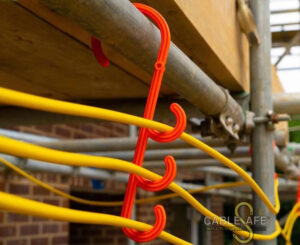
Cable management is often overlooked in industrial environments. Yet poorly managed cables can quickly lead to safety hazards, operational inefficiencies, and unnecessary damage.
From loose cables on the ground to unsecured lines at height, small mistakes can have serious consequences. The good news? Most of these issues are easy to fix once you know what to look for.
Below are five common cable management mistakes—and how to avoid them.
One of the most common mistakes is simply leaving cables loose or unsupported. This increases the risk of:
In busy work environments, unsecured cables are constantly exposed to movement, equipment, and foot traffic.
How to avoid it
Use proper securing systems such as safety hooks to keep cables elevated and organized. This not only improves safety but also extends the lifespan of your cables.
Cables installed at height can become a serious hazard if they are not properly secured. Loose or hanging cables can fall, especially in dynamic environments with vibration or movement.
This creates a risk of:
Always secure cables using reliable fixing systems. In areas where cables run above walkways or work zones, consider combining this with additional protection such as barriers or toe boards.
For edge protection solutions, check this out.
3. Poor routing of cables
Cables that are routed inefficiently—across walkways, through tight spaces, or near moving equipment—are more likely to become damaged or create unsafe situations.
Common issues include:
How to avoid it
Plan cable routing carefully. Keep cables:
Using cable guides or guards helps maintain structure and reduces wear over time.
Cables that are exposed without protection are vulnerable to:
This can lead to system failures, downtime, and safety risks.
How to avoid it
Use cable guards to protect cables from impact, pressure, and environmental conditions. Cable guards help extend the lifespan of cables while maintaining a safer workspace.
They are especially important in areas with:
Many companies rely on temporary fixes like tying cables down or manually repositioning them. While this may seem effective short-term, it often leads to inconsistent safety.
Manual solutions depend on people remembering to maintain them—and that’s where things go wrong.
How to avoid it
Implement passive safety solutions that work automatically and consistently. This includes:
The goal is to reduce reliance on human behavior and create a system that maintains safety at all times.
Effective cable management is not just about organization—it’s about safety, reliability, and long-term performance.
By addressing these common mistakes, you can:
Small improvements in cable management can make a big difference.
Cable management might not always be the first thing companies focus on, but it plays a critical role in workplace safety.
By securing cables properly, protecting them from damage, and using the right systems, you can prevent many common risks before they become real problems.
Because in industrial environments, safety isn’t just about big systems—it’s also about getting the small details right.
Recommended equipment
For distributors & installers
Register a free trade account for distributor rates, faster reordering and a dedicated contact.
Browse more articles or talk to our team about your site’s cable, dropped-objects or confined space safety needs.
Ficha técnica e declaração de conformidade
Introduza os seus dados uma vez — será redirecionado diretamente para a página de download e todas as outras fichas técnicas do site serão abertas sem que lhe seja pedido novamente.